
The Invisible Wound: Trauma through Ongoing Warfare, Forced Displacement and Erasure
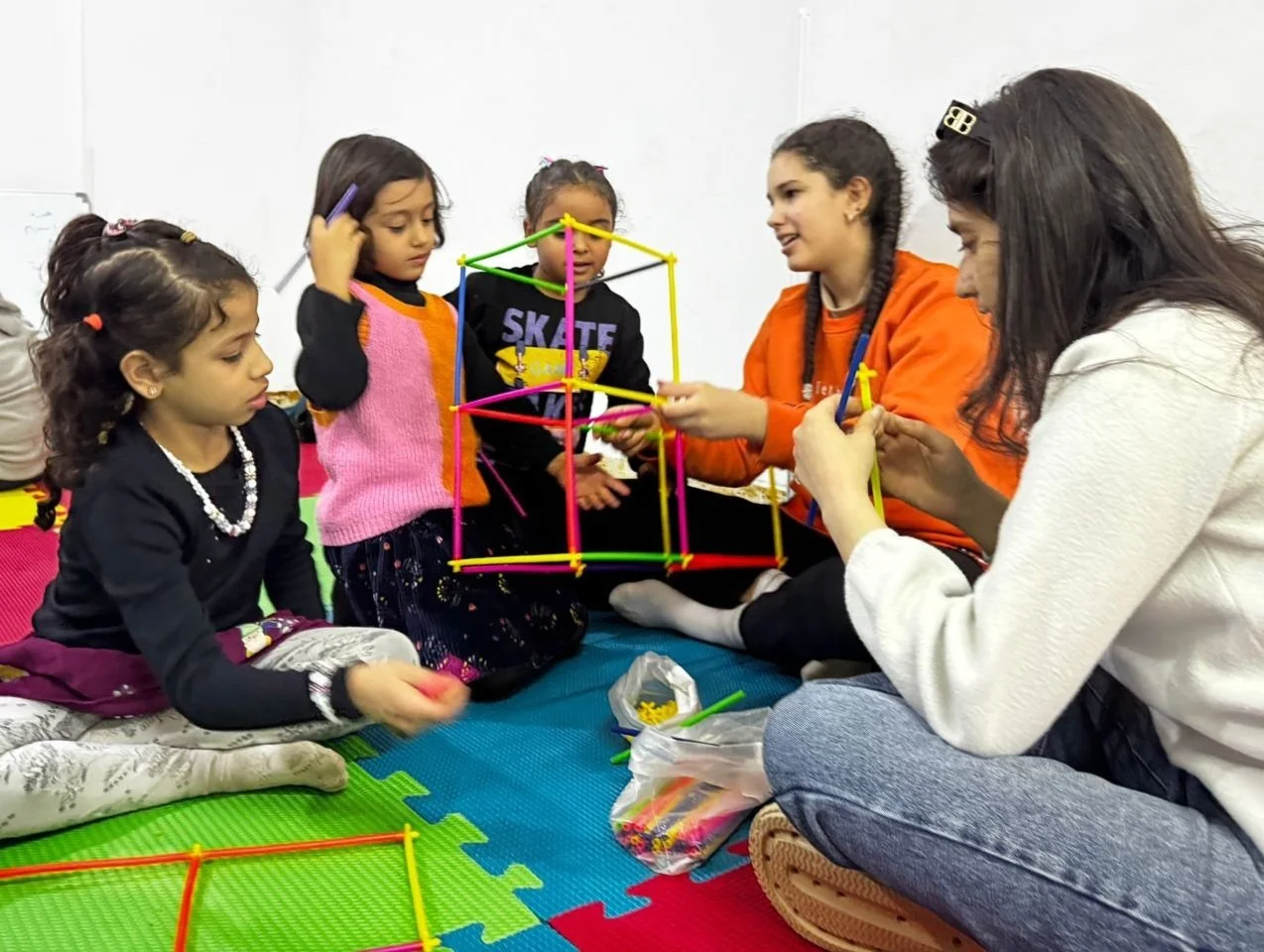
Childhood in Palestine is violated before a child even enters the world. The coercive environment imposed by decades of neverending occupation severely undermines Palestinian children’s right to life and deprives them of the ability to grow and develop in safety and dignity.
These realities reshape family life and collective identity, while profoundly affecting both the present wellbeing and future possibilities of Palestinian children.
Forced Growth
Based on surveys and observations recorded by our field experts in 2025, 100% of children in Gaza are in urgent need of immediate psychosocial intervention due to the effects of structural violence, genocide, and repeated forced displacement.
Nearly 80% of homes have been destroyed, stripping children of the sense of protection that a stable home provides. The systematic destruction of 95% of education facilities and all of Gaza’s 12 universities deepens the obstacles to children’s holistic development, as it deprives children of cultivating a sense of dignity and their full physical and mental potential, in continuum with family life.
This total, intentional collapse has forced children to abandon childhood and assume heavy adult responsibilities for survival, such as collecting firewood, waiting exhausting hours for water, or acting as primary caregivers for younger siblings. This phenomenon, known as “forced growth,” compresses and disrupts normal psychological and cognitive development, creating a profound emotional and behavioral void that directly leads to the erosion of future aspirations.
Intergenerational Trauma & Clinical Limits
This reality is not new: it reflects decades of systematic and structural violence targeting Palestinian children. Since the Nakba of 1947-1949, Palestinian life has been punctuated by cycles of war, forced displacement, and dispossession, methodically targeting four generations of Palestinian children. More than 80% of children in Gaza descend from Palestinians who have been expelled from their homes during the Nakba, inheriting generations-old wounds of abuse, injustice and an enduring longing for return.
Traditional psychological frameworks such as Post-Traumatic Stress Disorder (PTSD) become insufficient in this context. PTSD is generally conceptualized as a response to a discrete traumatic event that has occurred in the past. In Palestine, childhood unfolds within a continuous, repetitive, and open-ended environment of violence and insecurity. Trauma is not confined to the past but constitutes an ongoing collective condition, in which fear and uncertainty are woven into the fabric of everyday life across generations.
Trauma & Educational Void
The forced displacement of Palestinian families to Cairo involves deeply intertwined humanitarian, psychological and social dimensions, exacerbating their hardships beyond material needs. Most displaced children arrive in Cairo suffering from severe psychological distress as a result of witnessing relentless bombardment, acute loss and crude violence in Gaza amidst decades of siege and deprivation. This manifests in anxiety, anger, isolation, depression and mental dissociation. Many suffer from insomnia, bed-wetting, panic attacks and chronic nightmares.
Children’s ongoing trauma is heavily compounded by an educational void: thousands of children risk losing years of schooling. In Egypt, obtaining residency permits and documentation for Palestinian refugees is nearly impossible due to administrative hurdles. Without the required documents, enrollment in public schools is unattainable and most families cannot afford private school fees. This leaves children and their families with the sole option of online schooling provided by the Palestinian Ministry of Education. Remote learning is a profoundly challenging experience and deepens existing psychological distress and trauma. The difficulties in concentration and feelings of isolation produced by online schooling distance children from their social fabric and everyday sources of support. This limits key opportunities that are essential to cognitive, emotional, and physical development.
Strained Parenting & Socio-Economic Shifts
Many families experience forced separation. Most mothers and children have fled to Cairo alone, while fathers or adult sons either remain in Gaza due to risk of arrests at the border or have been killed. This leaves mothers carrying the heavy burden of being the sole breadwinner and caregiver in an entirely new environment without the support of extended family and community networks. Parents are not spared by psychological distress as they navigate forced displacement, economic hardship, and grief simultaneously.
Within this context of compounded anxiety, emotional exhaustion can reduce a family’s capacity to provide a stable, responsive environment for children. Familial relationships may become increasingly strained, heightening tension within the household and creating gaps in emotional security. This situation can also generate feelings of guilt among primary caregivers regarding their ability to meet their children’s needs, further deepening the emotional burden carried within already fragile family systems. Many primary caregivers who held stable jobs in Gaza are now forced to rely entirely on aid or accept precarious, informal work. This transition intensifies feelings of helplessness, existential anxiety, and a perceived loss of value within the family structure under an uncertain future, an unfamiliar setting and rapidly depleting resources.
Healthcare Care & Permanent Disabilities
Wounded Palestinians, particularly those with critical injuries requiring urgent medical intervention, are often transferred to hospitals in Egypt. A significant proportion of patients arriving from Gaza are amputees or are living with permanent physical disabilities, and many experience complex psychological trauma that requires specialised, long-term rehabilitation. However, upon discharge, both patients and their companions are abruptly confronted with urgent and unmet needs, including housing, daily living expenses, and access to costly medications and rehabilitation supplies that are not covered by Egypt’s public healthcare system.
In this context of displacement and medical vulnerability, companions, most often mothers or wives, carry a dual burden of care and emotional distress, navigating constant fear for the patient’s survival while remaining separated from their families in Gaza. These compounded pressures extend the continuum of harm beyond the clinical setting, embedding medical recovery within broader conditions of displacement, insecurity, and fragmented family life.
The PHRC firmly asserts that urgent psychosocial support and treatment of these invisible wounds, both in Gaza and Cairo, are not secondary or mere recreational interventions. They constitute an existential and necessary psychological first aid, which is essential to mending the intergenerational cycle of trauma and protecting children’s right to life, safety, and development as fundamental forms of collective resistance against erasure.